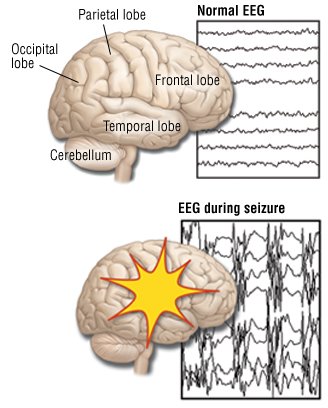
Epilepsy is a disorder which is characterized by spontaneous, recurrent, unprovoked seizures. Seizures are sudden surges of electrical activity in the brain caused by complex chemical changes that occur in brain neurons. These uncontrolled electrical discharges of neurons interrupt normal function. This abnormal electrical activity can be seen as spontaneous, rapid firing of the neurons. This firing can spread to involve adjacent areas, distant areas, or even the whole brain. The factor that causes this abnormal firing is not clear. Epilepsy can affect everyone differently, this is due to a wide range of seizure types. Individuals with epilepsy can experience multiple types of seizures or a single type. Because of this, epilepsy varies from person to person.

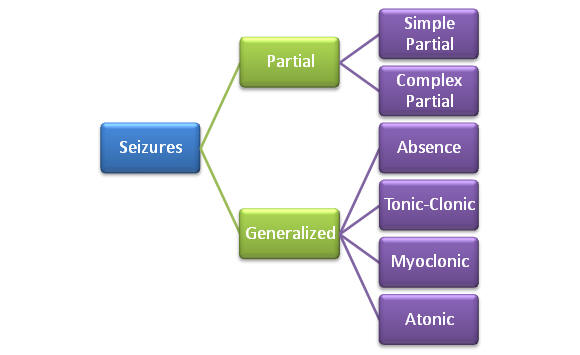
Seizures are divided into two major categories: generalized and focal (partial). In generalized seizures, both sides of the brain are affected by sudden surges of electrical activity at the same time. In most cases the patient loses consciousness for a few seconds to several minutes. Generalized seizures can further be categorized as tonic-clonic, myoclonic, atonic, or absent. In focal seizures abnormal electrical discharge is limited to one area of the brain. Symptoms are directly related to the function of the area affected. Focal seizures can be further categorized as simple or complex.

Tonic-clonic seizures (grand mal): the most common type of generalized seizures are also the most dramatic.They are characterized by losing consciousness and falling to the ground if the patient is upright. Individuals often experience convulsions characterized by total body stiffening followed by a rhythmic jerking of the body. After the episode the person is usually confused, tired, and sore. The person will have no memory of the seizure.
Myoclonic seizures: are brief, sudden jerks due to rapid alternating contraction and relaxation of a muscle. Usually they don’t last more than a few seconds. People may experience a single one or many in a short time. Individuals who do not suffer from epilepsy may experience myoclonic seizures. The most identifiable examples are hiccups and the jerk that wakes you up just as you are falling asleep. However in epilepsy, these seizures cause abnormal movements on both sides of the body at the same time.
Atonic seizures (drop attacks): brief seizures that cause an unexpected and rapid drop to the ground. They result from stiffening or sudden loss of muscle tone. They are difficult to treat and have a great risk of injury.
Absence seizures (petit mal): brief and characterized by staring spells without motor movements. People tend to have a look of confusion and seem to be “out of it”. This type is common in children.
Simple partial epileptic seizures: abnormal electrical discharge is confined to a small part of the brain. Symptoms reflect the part of the brain being affected, the can be motor, sensory, autonomic, or psychic. People experience normal awareness of their surroundings.
Complex partial epileptic seizures: are also confined to a particular area of the brain, but have spread enough that individuals experience an impaired level of awareness about their surroundings.
Sources:
LDH 1419-1421